Safety, Sanctuary, & Liberation: Our Anti-Carceral Policy
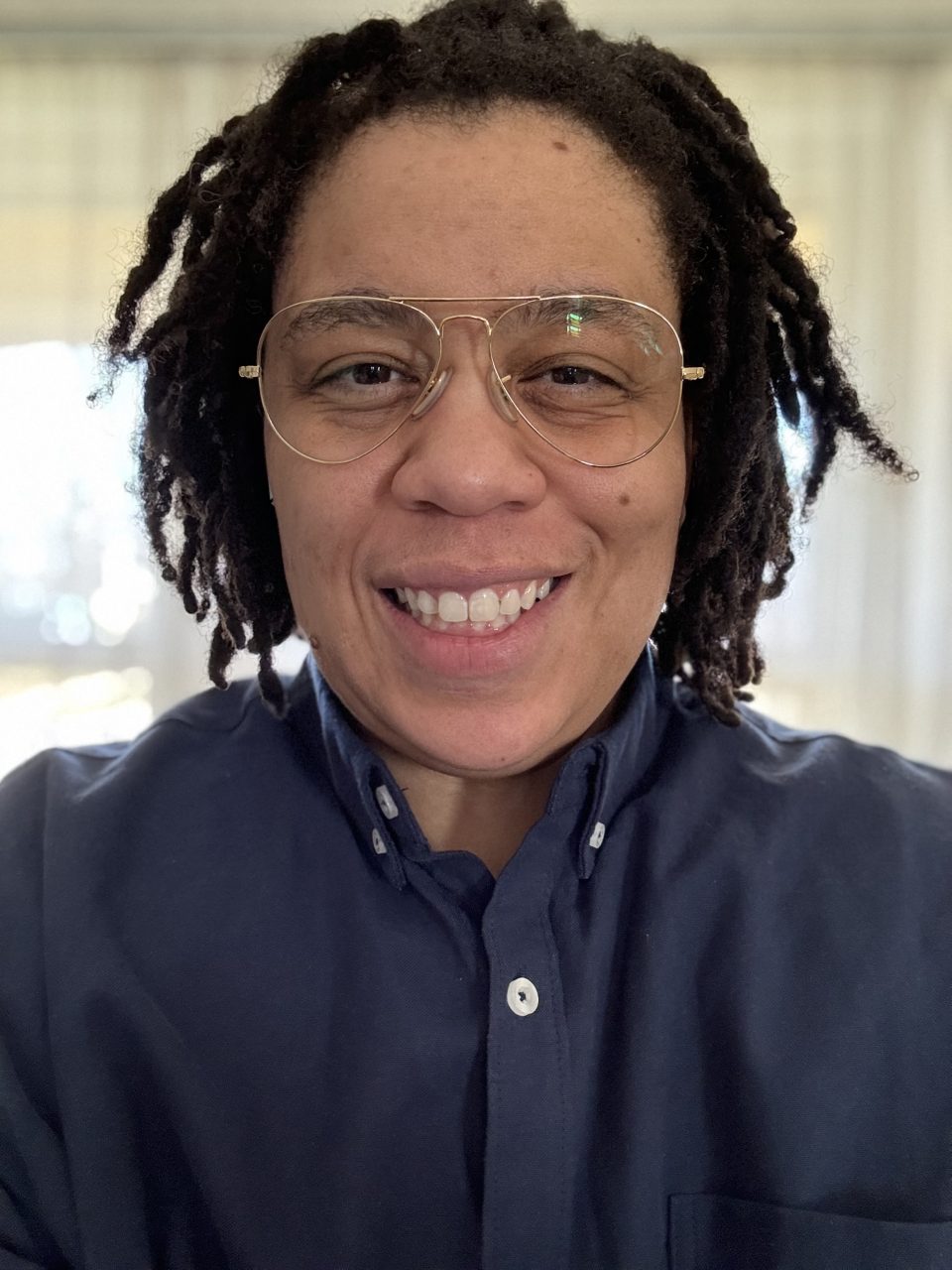
In the Black radical tradition, we understand that the state is not always a site of safety—especially for BIPOC, queer, trans, and neurodivergent folks. As a carceral abolitionist, a clinician, and a Professor at the Columbia University School of Social Work, I believe that true healing cannot happen under the threat of state-sanctioned punishment.
At the Orange Oasis Healing, we prioritize Community-Based Safety. This policy outlines how we protect your life and your autonomy while navigating the legal requirements of my clinical license.
The Philosophy of Sanctuary
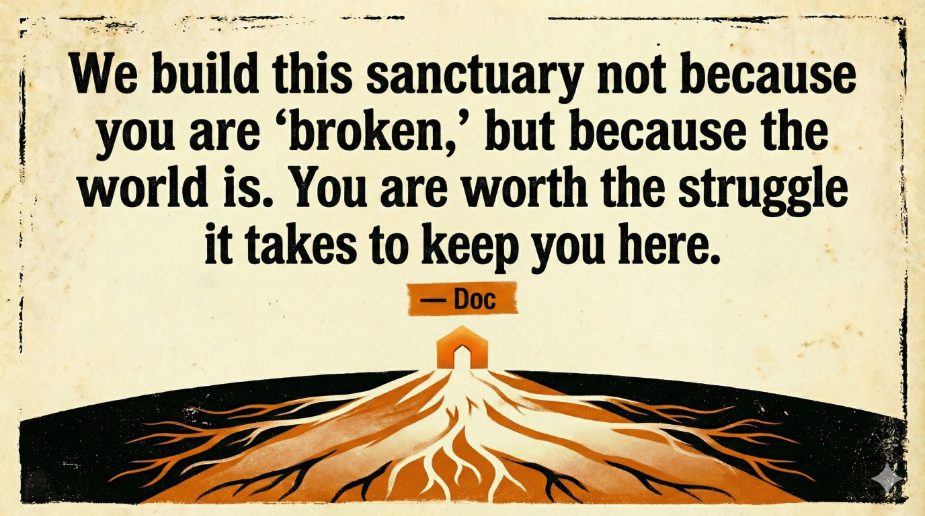
I view our therapeutic relationship as a sacred sanctuary. Grounded in liberation theology, my goal is to walk with you through the “deep end” without inviting the violence of carceral systems (such as unnecessary police intervention) into your healing process.
However, because I hold a state-issued license in Maryland, Maine, and Massachusetts (and Georgia in 2026), I am required to be transparent about where the sanctuary intersects with the law.
Mandated Reporting: A Transparency Statement
I do not believe in “trapping” my clients. I want you to have the intellectual and emotional agency to know exactly when the state requires me to disclose information. Under current law, I am required to break confidentiality only in these specific, life-threatening instances:
1. Protection of the Vulnerable
If I have reason to believe that a child, a dependent adult, or an elder is being abused or neglected, the law requires a report to state-mandated agencies. While my priority is the safety of the vulnerable, I am deeply mindful of how these systems traumatize marginalized families. If a report is necessary, I will aim to remain in partnership with you through that process.
2. Imminent Harm to Others
If you express a clear, specific, and imminent intent to cause severe physical harm to an identifiable person, I am legally obligated to notify the appropriate authorities to protect that individual.
3. The Struggle to Stay (Suicidality)
My primary mission is to keep you in the “land of the living.” I reject carceral responses to mental health crises. If you are experiencing thoughts of self-harm, we will utilize a Safety Plan rooted in your community.
I will exhaust every relational, somatic, and community-based resource before involving state-mandated intervention. If your life is in immediate danger and we cannot establish a collaborative way to keep you safe, the law requires me to initiate a process for additional support. In these rare moments, I remain your clinical advocate, working to minimize systemic harm.
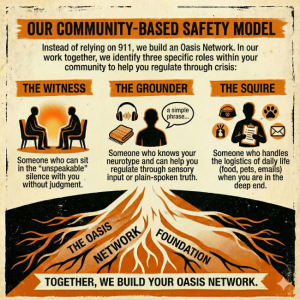 Our Community-Based Safety Model
Instead of relying on 911, we build an Oasis Network. In our work together, we identify three specific roles within your community to help you regulate through crisis:
The Witness: Someone who can sit in the “unspeakable” silence with you without judgment.
The Grounder: Someone who knows your neurotype and can help you regulate through sensory input or plain-spoken truth.
The Squire: Someone who handles the logistics of daily life (food, pets, emails) when you are in the deep end.
Regulated Resistance: De-escalation Strategies
We utilize the tools of the Oasis to anchor your nervous system before a crisis peaks:
Embodied Focusing: Listening to the “felt sense” in the body to name the pain before it becomes overwhelming.
Sandplay & Somatics: Using tactile tools to ground the body in the present moment.
Harm Reduction: Prioritizing your physical safety and autonomy over moralistic “compliance.”
Anti-Carceral Resources
If you are in crisis and need immediate support that prioritizes your identity and safety from the state, I recommend these community-led resources:
Project LETS: For disability justice and peer-led crisis support.
Trans Lifeline (877-565-8860): Peer support for trans people, by trans people, with a strict no-police-intervention policy.
Blackline (1-800-604-5841): A 24/7 text/call line for BIPOC individuals, providing peer support through a Black, queer, and trans-feminist lens.